
Storm Damage Repairs for Somerset Homeowners
- Adin Harris
- 7 days ago
- 6 min read

A loose tile, overflowing gutter or lifted section of fascia can turn a spell of bad weather into a much bigger property problem. Prompt storm damage repairs help protect your Somerset home from water ingress, further deterioration and the avoidable cost of leaving a small defect exposed.
High winds and driving rain test every part of a property’s exterior. Roof coverings can shift, gutters can pull away from their fixings, and rainwater can find its way behind damaged fascias, cladding or flat-roof edges. The visible issue is not always the full story, which is why a clear assessment after a storm is often the safest first step.
What storm damage can do to your home
Storms do not need to remove half a roof to cause trouble. A single slipped tile can let rain reach the roof structure beneath it. A broken gutter joint can repeatedly soak a wall, while blocked or dislodged downpipes may send water towards brickwork, paths and foundations rather than safely away from the property.
Wind can also affect the parts of a home that are easy to overlook. Older timber fascias and soffits may already be weakened by years of moisture. When gutters are full of water or branches and debris add extra weight, weakened boards and fixings can fail. What begins as a sagging gutter can lead to damaged roofline boards, staining to external walls and damp problems internally.
Flat roofs need careful attention after severe weather too. Pooled water, lifted edge trims, split coverings or damaged flashing can compromise a roof’s ability to shed rain. EPDM rubber roofing is a durable choice when correctly installed, but like any roofing material, it should be inspected if storm debris, falling branches or high winds have affected the area.
The urgency depends on the damage. A small cosmetic mark to cladding is different from an active leak over a bedroom ceiling. However, even minor defects deserve attention before the next period of rain makes them worse.
Check safely before arranging storm damage repairs
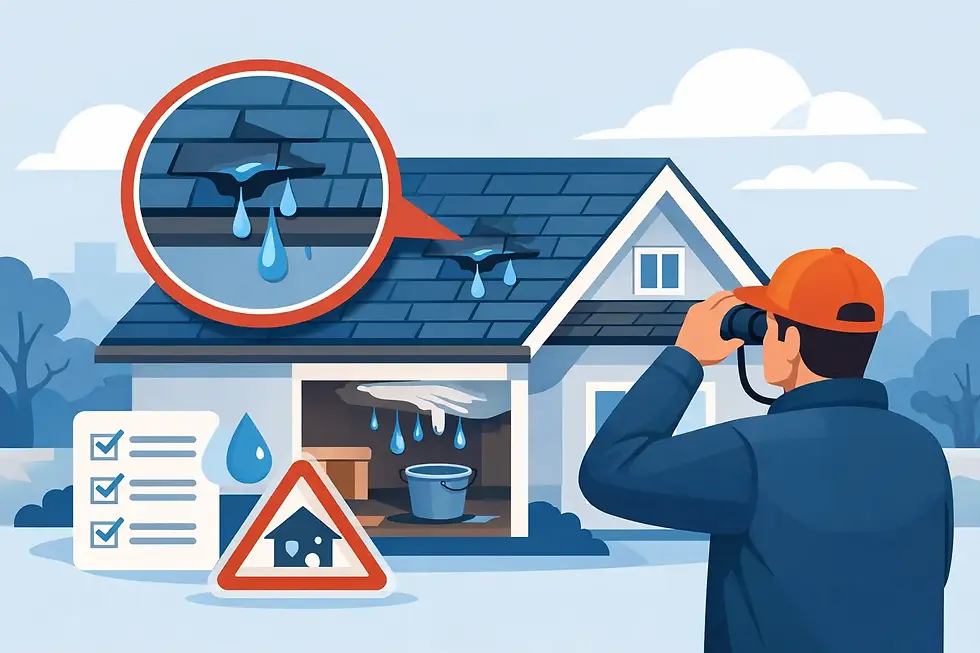
Once conditions are safe, walk around the property from ground level in daylight. Do not climb onto a roof, lean a ladder against damaged guttering or attempt to remove loose materials above head height. Wet surfaces, unstable tiles and overhead cables create risks that are not worth taking.
Look for obvious signs such as missing or slipped tiles, broken ridge tiles, damaged flashing, bent guttering, detached downpipes, loose fascia boards and debris sitting in roof valleys or gullies. Indoors, check loft spaces and upper rooms for new water marks, damp insulation, dripping, bulging plaster or a musty smell.
If rainwater is entering the home, move furniture and electrical items away from the affected area where it is safe to do so. Catch drips with a container and take clear photographs of the damage before anything is moved or temporary protection is put in place. Photos can help a contractor understand the problem and may also be useful if you need to speak with your insurer.
A short written note can be helpful as well. Record when you noticed the issue, which rooms are affected and whether the leak occurs only during heavy rain or continues afterwards. These details help identify whether the source is likely to be roofing, guttering, a flat roof, roofline components or another external defect.
When a temporary repair is the right choice
After a major storm, the immediate priority is to stop further water entering the property. A temporary repair may be appropriate where permanent work cannot be completed safely straight away, such as during ongoing high winds or persistent rain.
Temporary protection is not the same as a finished repair. Covering an exposed section, securing a loose component or redirecting water may protect the property in the short term, but the underlying cause still needs to be assessed. A patch that appears to solve a leak can conceal damaged timber, failed fixings or cracked materials beneath.
The right approach depends on the condition of the surrounding area. Replacing one tile may be sufficient if the roof is otherwise sound. If several tiles have slipped, the felt beneath has deteriorated or the fixings are failing across a wider section, a more complete repair will provide better long-term protection.
The same applies to gutters and roofline. Reconnecting a downpipe may resolve an isolated problem, while repeated leaks from ageing joints, sagging runs and rotting timber can make replacement the more sensible investment. Honest advice should distinguish between work that is urgently needed and work that can be planned for later.
Roofing, gutters and roofline: finding the real source
Rainwater rarely points directly to its entry route. Water can travel along roof timbers, behind fascia boards or across a ceiling before becoming visible indoors. That is why a professional inspection should look beyond the first damp patch.
A roofing assessment may include roof tiles or slates, ridge and verge details, flashing around chimneys and walls, valleys, roof membrane and the condition of any flat-roof covering. Gutters should be checked for blockages, cracks, poor falls, leaking joints and secure brackets. Fascias and soffits should be assessed for signs of rot, movement, staining or gaps that may allow wind-driven rain into the roof space.
For many Somerset homes, a heavy downpour exposes an existing drainage issue rather than creating a completely new one. Gutters that are partially blocked with moss or leaves can overflow in ordinary rain; a storm simply makes the weakness impossible to ignore. Cleaning and maintaining gutters at the right intervals helps prevent this, particularly near mature trees or where roof moss is common.
Choosing repairs that last beyond the next storm
It is understandable to focus on the quickest visible fix after bad weather. Yet the cheapest option is not always the best value if it leaves weak materials, poor drainage or failing components in place.
Quality materials and careful installation matter because exterior elements work together. A roof sheds water into guttering. Gutters need secure support from sound fascias. Downpipes need to carry water away efficiently. If one part fails, the others can be put under unnecessary strain.
For damaged timber roofline, modern uPVC fascia, soffit and gutter systems can offer a clean, low-maintenance replacement that improves weather protection and appearance. Where a flat roof has reached the end of its working life or sustained more extensive damage, a properly installed EPDM rubber roof may be a more dependable solution than repeated small patches.
There are trade-offs to consider. A targeted repair usually costs less upfront and makes sense for a localised fault on an otherwise healthy roof. Replacement involves a greater initial outlay, but may reduce ongoing maintenance and protect vulnerable areas more effectively where materials are broadly worn. The best choice should be based on the actual condition of your home, not a one-size-fits-all recommendation.
Getting clear advice after storm damage
A good contractor should explain what has been found in plain English, show you the relevant areas where possible and set out the proposed work clearly. You should understand whether the job involves an emergency make-safe, a repair, maintenance work or replacement, along with the reasons for that recommendation.
Ask what materials will be used, whether adjoining components need attention and how the work will manage rainwater once complete. It is also sensible to ask if there are signs of older deterioration that the storm has revealed. This does not mean every issue must be dealt with immediately, but it gives you a realistic picture of priorities.
At FasciaTech, property assessments and free no-obligation quotations are designed to give homeowners that clarity. Whether the problem is a leaking gutter, damaged roofline, slipped roofing materials or a failing flat roof, the aim is to recommend a tailored solution that protects the property without unnecessary complexity.
Preventing repeat storm damage
No exterior can make a home entirely immune to severe weather, but regular care reduces the chance of avoidable damage. Keep gutters and gullies clear, arrange repairs when small faults first appear and pay attention to water marks, recurring overflows or loose roofline elements rather than waiting for a major storm.
After any repair, take a moment during the next rainfall to see whether water is flowing cleanly through the guttering and away from the house. That simple observation can identify a developing problem early. Timely, well-finished work protects more than your roof - it helps keep your home dry, presentable and ready for whatever the Somerset weather brings.


Comments